Why Dancers Shouldn’t Sleep on Community Colleges

During her senior year of high school, Elizabeth Grace Mainor knew she wanted to keep dancing after graduation, but she wasn’t sure exactly how she wanted to go about it. “I didn’t feel ready to audition for colleges and make that committed four-year choice,” she says. So she took advantage of the dance program at Collin College, a community college near her home in Texas—an affordable, low-risk way to complete her core academic coursework while keeping up her technique and exploring options within the dance world.
She ended up getting “more than I ever could have imagined out of the experience,” she says. By fully immersing herself in the dance department and performing regularly, she found her artistry growing in ways she hadn’t expected. She’s now a dance major at her dream four-year college, Oklahoma City University. “I really do not think that I would have been able to achieve that if I hadn’t started with community college,” she says.
Mainor isn’t the only one to be surprised by how much a community college can offer. Many people still assume that these schools have lower dance or academic standards, since they cost so much less than four-year degree programs and don’t have the same name recognition. But that stigma is misplaced. “Community college is not a downgrade,” says Fritzlyn Hector, an alum of Queensborough Community College (QCC) in New York City. Her years there renewed her love of learning and encouraged her to take the next steps academically: She went on to earn an MBA in marketing and is now pursuing a doctorate in educational leadership while touring with Dorrance Dance Productions, and also directing dance in the musical theater and acting program at the Long Island University Post campus.
Of course, every community college is different. But those with dance programs could potentially offer benefits you can’t find at a four-year university.
More Choices
Unlike conservatory-style dance departments, community colleges often let dancers “choose their own adventure,” creating schedules tailored to their interests and needs. For instance, they can dive head-first into dance, like Lizzie Rhineer, who signed up for as many dance classes at Orange Coast College (OCC) as she could fit in a day while keeping her general-education courses to a minimum. “It felt like I was in a day-in, day-out intensive,” she says.
The other extreme can be doable too: At Anne Arundel Community College in Maryland, dance specialist Margaret Russell says students who want to pursue a nondance major can still audition for the college’s dance company. That allows them to train and perform without dance classes eating up their credits.
Less Competition for Opportunities
Community colleges may not have the extensive resources of well-funded universities, but their smaller size can sometimes mean students don’t have to compete for the opportunities that are available. For example, Leslie Bitong, a faculty member at Golden West College in California, says that virtually any dance student can join the department at the American College Dance Association (ACDA) conference—while at bigger universities, dancers sometimes need to audition, or wait until their senior year, to attend.
Or take Mainor’s experience at Collin College. She joined the Collin Dance Ensemble, where she got to perform and choreograph. She represented her school as a student ambassador regional spokesperson at ACDA. She got a job in the department as a student assistant, getting a behind-the-scenes perspective. Most helpful of all, she says, she was able to closely connect with faculty members, who gave her invaluable feedback. “I feel like I’ve gotten to do more in two years than I would if I had gone right away to a four-year college,” she says.
Not Just a Transition
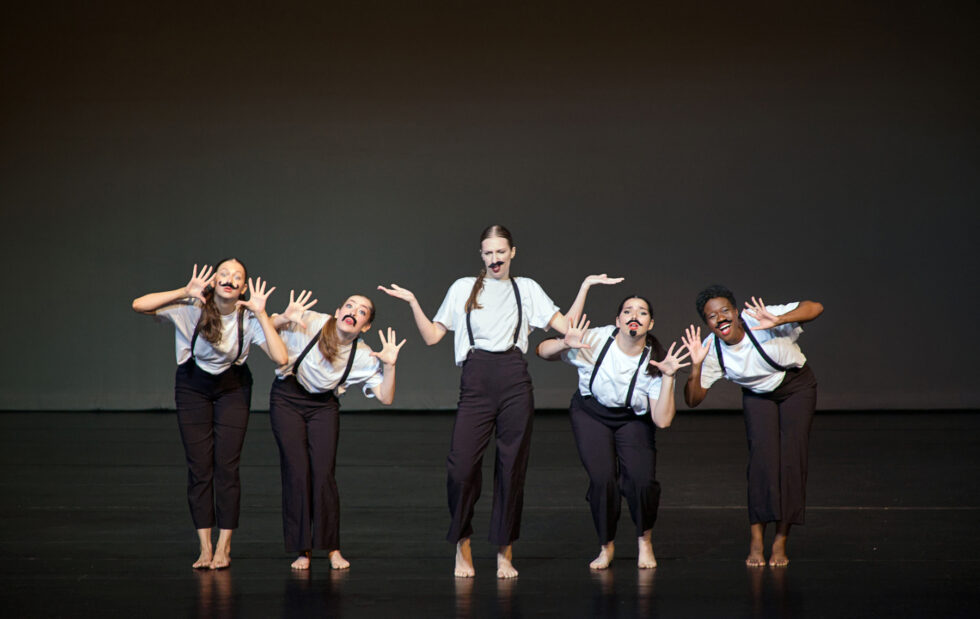
Many people think of community colleges as a quick stopover before transferring to a four-year program. But some dancers take technique courses at their local community college for years on end, since it’s usually a far cheaper option than open classes at a dance studio. Bitong adds that there are various routes to financial aid that can lower the cost even further, or cover it completely. In fact, Rhineer says her two years at OCC were totally free—a perk for many California residents.
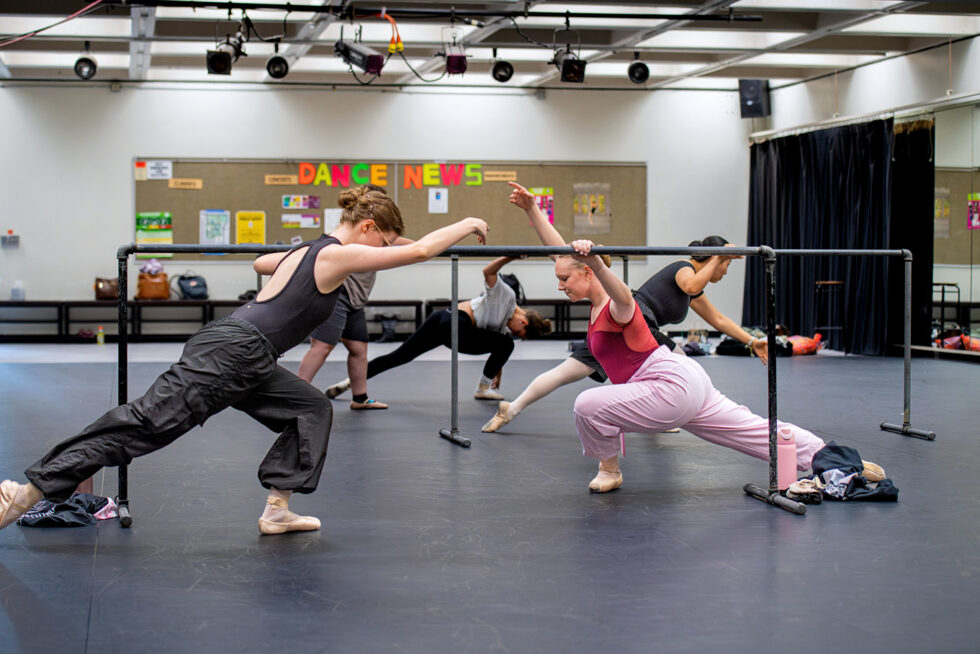
Finances aside, this route also offers more consistent training than drop-in classes. Dancers are able to study with the same students and teachers each week, creating ongoing relationships and developing, well, a community. “You’re really building throughout the semester, working with the dance professors on improving and reaching certain goals,” Bitong says.
Many students also relish the chance to perform—a somewhat rare opportunity for adults who aren’t professional dancers. “We have quite a few dancers that are not dance majors but have danced their whole life, and they are still able to perform, rehearse throughout the week for two to four hours a day,” says Russell, who directs the Anne Arundel Community College Dance Company.
More Room to Experiment
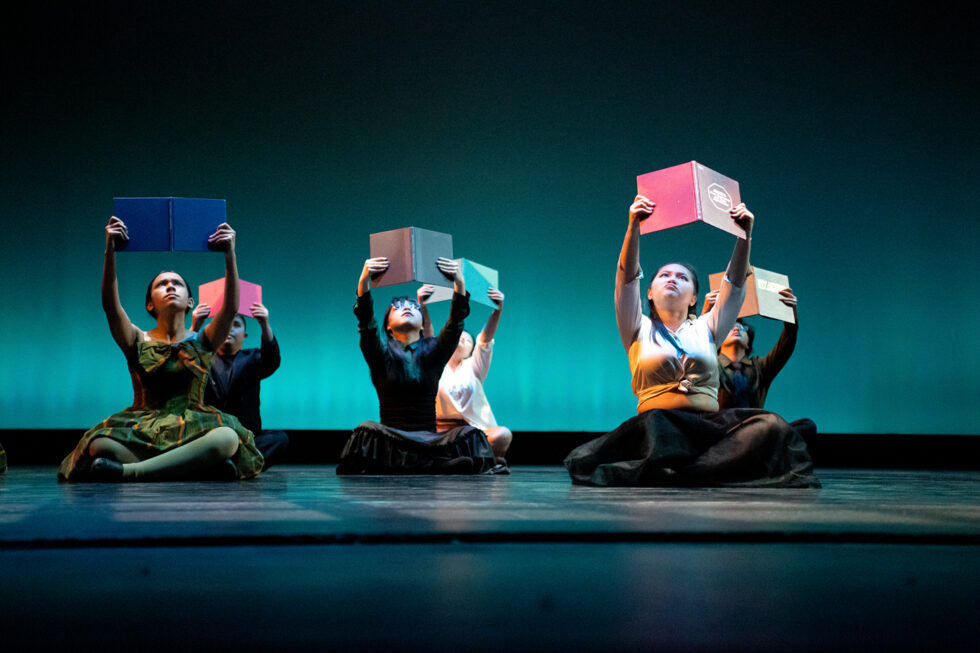
Community colleges aren’t competing for rankings the way university dance programs often are, which can lead to a more open-minded vibe among faculty members and students. “It’s always felt like a really safe space to experiment with the movement or with the compositional creative process, more like a laboratory,” says percussive-dance artist Ryan K. Johnson, who attended Community College of Baltimore County as a teenager and completed his MFA at The University of Texas at Austin. “There’s a willingness to make mistakes and then find new discoveries, without the pressure you sometimes see in a traditional four-year institution.”
Case in point: While body percussion and tap are showing up in academia more often these days, Johnson was invited to set work at Queensborough Community College 10 years ago by Emily Berry, the dance director at the time. “She already had the foresight to see what young people needed before it became trendy,” he says. “And I think that’s what community colleges are doing—they’re taking the chance, they’re taking the risk.”
The Tradeoffs to Consider
Rhineer admits that she sometimes wonders what it might have been like to live in a dorm or move away from home for school. But she points out that she can move in with friends or change states anytime she wants as a working adult. Putting that off for a couple years was a small sacrifice for getting a free education—particularly given that one of her favorite professors also taught at a nearby private school, Chapman University. “He quite literally taught the exact same class,” she says. “And I didn’t pay a single penny for it.” She came away from her two years at OCC with a Pilates certification and a job dancing at Disneyland. “For me, it was the perfect route,” she says.
Some high school dancers already know exactly what they want to get out of college and have a dream university in mind. But for those who don’t, Johnson recommends community college. “Financially, it’s a smart route to go, and it gives you the time to really explore, develop, and grow,” he says. “It can truly be a transformative experience.”


