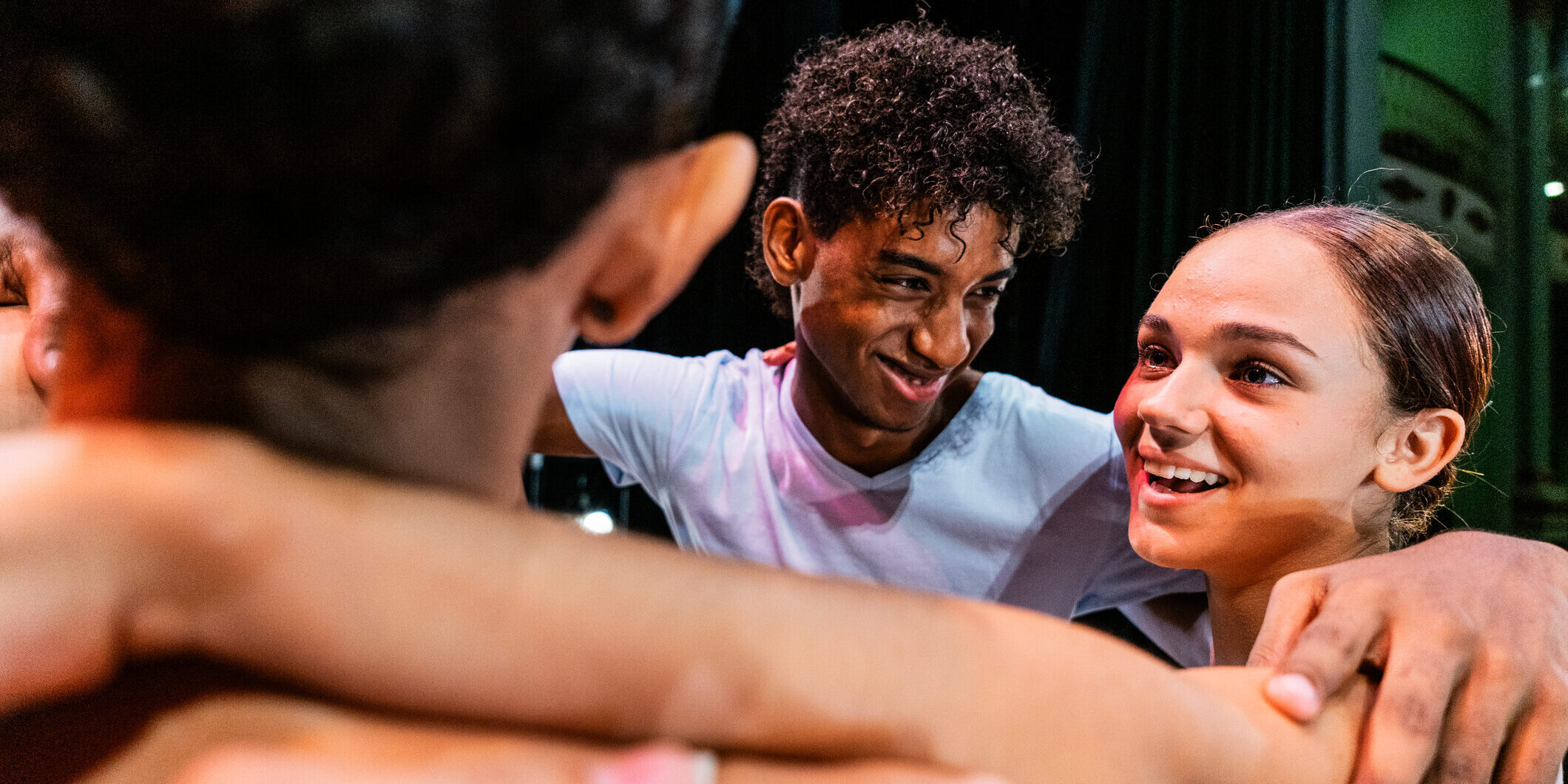
Better Together: The Value of Making New Friends at Competitions

Ten years ago, at the World Dance Pageant in Secaucus, NJ, an 8-year-old Adriana Ciociano sat down during a break and began talking to the girl sitting next to her, Delaney Theodoropoulos. Over the years, the two dancers continued to bump into each other at competitions and, as they got older, they grew closer.
Today, they’re roommates and teammates on Rutgers University’s dance team.
It may sound counterintuitive, but competitions and conventions can be surprisingly fitting environments for fostering new friendships. And those relationships can benefit dancers not only in the moment but for years to come.
Friendly Competition
A little friendliness goes a long way in competitive spaces, says Michelle Leagans, founder and owner of Power Intensives in Houston, TX. Villainizing the competition can backfire: “The competitive world just sucks everyone in, and it can end up getting ugly,” says Leagans. “I never performed my best when I wasn’t leading with positivity.”
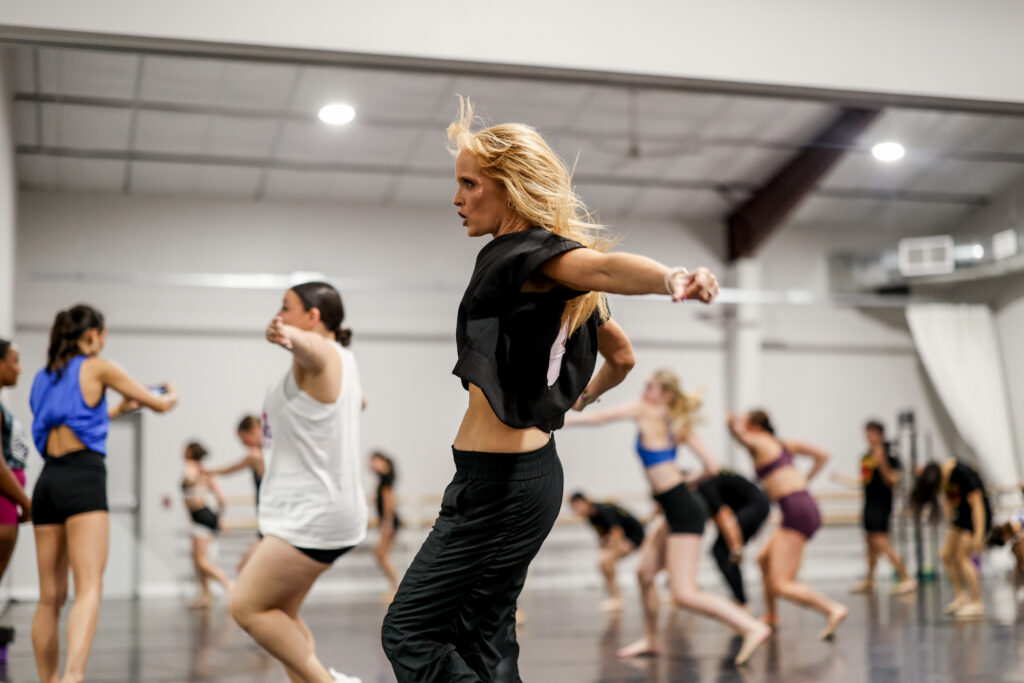
In her experience, Ciociano has sensed some stigma around being friends with the competition. “I feel like it was rare to see friendships between studios,” she says. “But I always thought it was cool saying hi to someone my other friends didn’t know, and supporting each other backstage.”
Leagans believes that studio culture is the number-one factor driving hostility toward competitors. “Studios that only believe in winning are probably not encouraging friendship,” she says. Remember that cliques or exclusionary behavior can read badly to others—including the teachers, judges, and fellow dancers you may run into later in your career. That doesn’t mean that every person will get along, or that competition doesn’t matter. “What I’m saying is there is a bigger picture,” says Leagans. “I honestly feel that we dance better, compete better, and do everything better when we feel love from each other.”
Let’s Make Friends
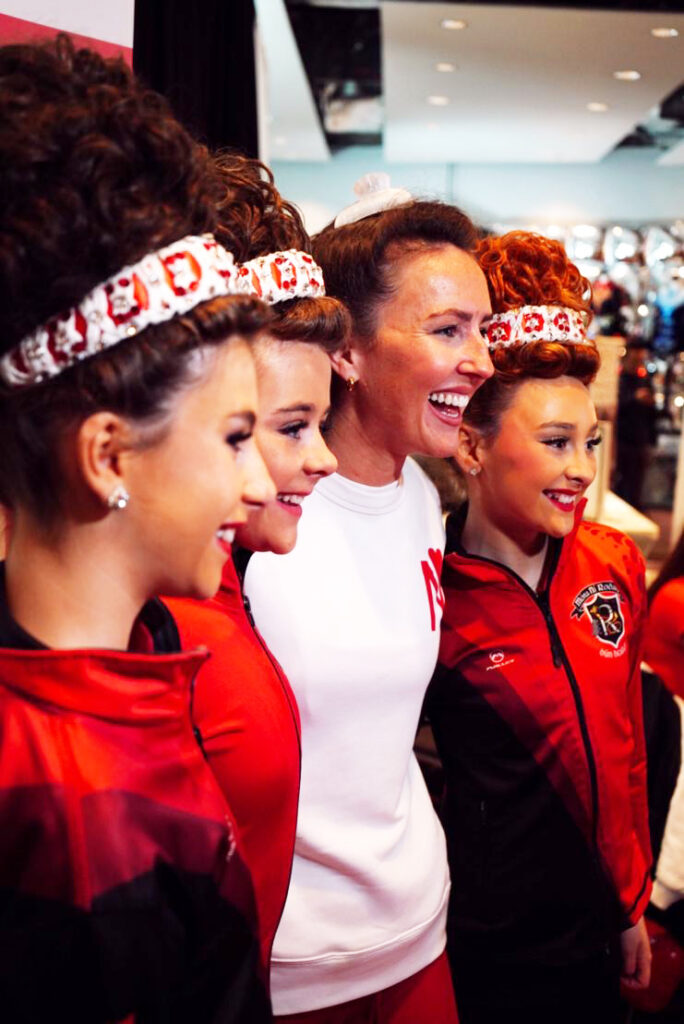
At competitions, a number of factors can support dancers in making new connections. For Megan Kerrigan, founder of Irish dance mentorship program Move with Meg, extra time between competition rounds offered the perfect opportunity to have fun with new people in a safe environment. Like Ciociano and Theodoropoulos, she’d eat meals with other dancers, or hang out with them during downtime. Longer events, especially ones at venues with entertainment spaces like common areas or pools, lend themselves toward that.
Naturally, says Leagans, dancers need to know when to put their game faces on—right before performing, for example. But there’s nothing wrong with telling someone during downtime how great they did. “There is no dancer in the world who doesn’t like a compliment,” she says, whether it’s about their performance, costume, music, or attitude. “You make everyone’s day by being nice, and it’s the best way to make a new friend.”
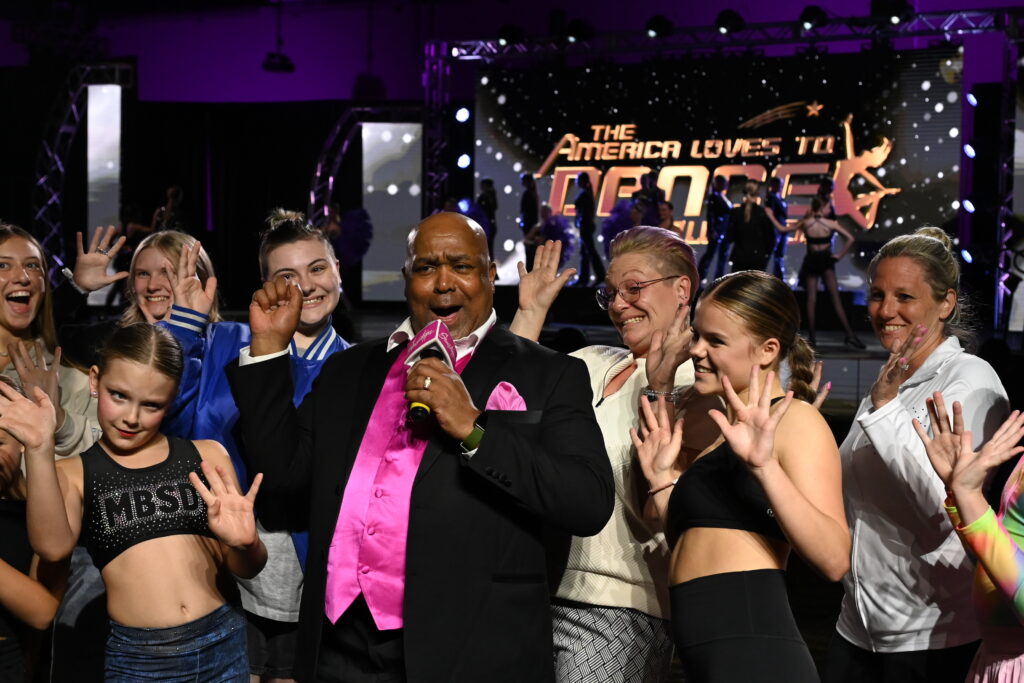
Showstopper host Julian Thorn sees different studios cheer for each other all the time, especially backstage. “I love to see that,” he says. In his eyes, friendship tends to blossom when the room’s overall mood feels positive and supportive. “And that starts with each of us.”
Someone in the Crowd
Approaching someone new can feel easier said than done, especially for more introverted kids. And especially in the middle of a crowded ballroom with hundreds of other dancers. “It’s overwhelming!” says Leagans. She encourages kids who go to competitions often to reach out to shyer classmates.
“I love when they’re like, ‘Hey, why don’t you stand up here with me?’ It can make such a difference.”
Thorn makes a point to connect independent competitors with other dancers. He says that, usually, all it takes is an introduction: “The next thing you know, they’re all going to the beach together!” He encourages dancers traveling with their studios to reach out to independent competitors, or anyone they see on their own. And starting early can help. “If you get comfortable with talking to other people when you’re young, it’s so much easier when you’re older,” says Ciociano.
Of course, that doesn’t mean dancers can’t rely on their friends from home, especially as they build confidence. “If you have your safe group, or someone you know you can go to for a pep talk, then you know who your people are for that,” says Kerrigan. Above all else, remain true to yourself, because that’s what makes genuine friendships possible.
The Real Win
Creating friendships at competitions has practical perks: honed communication skills, for example, and a strong network. It can also take some of the pressure off of performing, says Kerrigan, and, as a professional, it helps to have friends everywhere.
But those aren’t the reasons to make friends, and they aren’t the true benefits. “The grand overall scheme of life is bigger than dance,” says Leagans. “Who we are as humans and people matters so much more.”
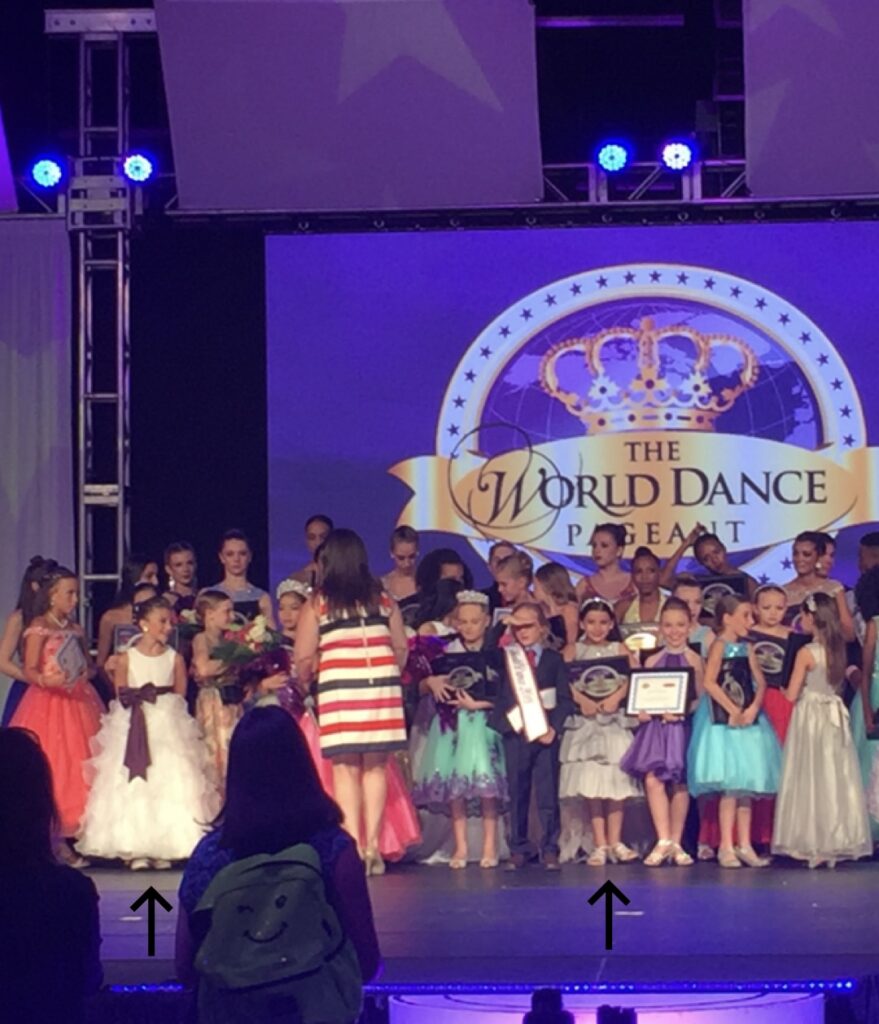
From left, indicated with arrows: Delaney Theodoropoulos and Adriana Ciociano at the 2016 Word Dance Pageant. Photo courtesy Ciociano. 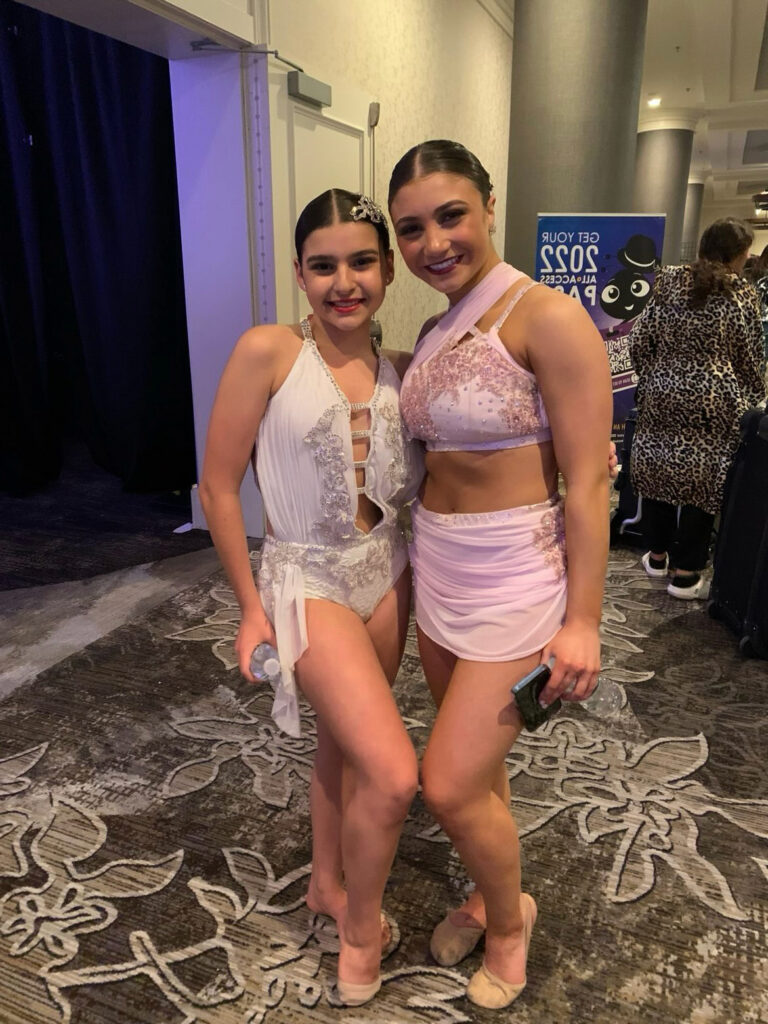
From left: Ciociano and Theodoropoulos at a dance competition in 2022. Photo courtesy Ciociano. 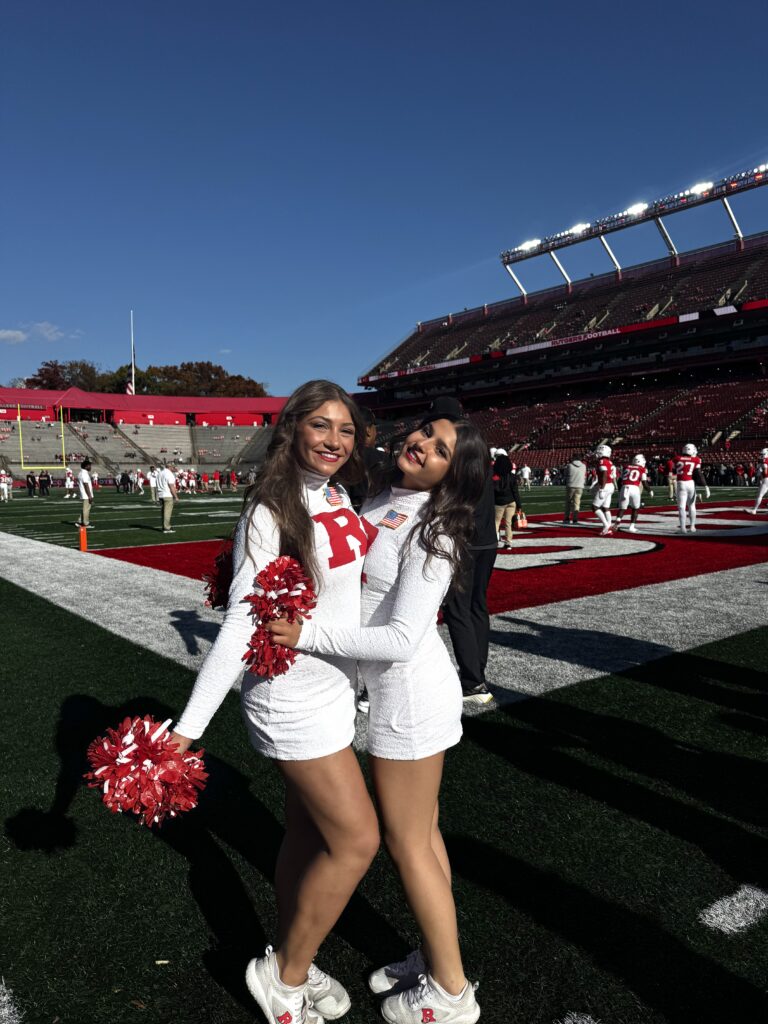
On the field with Rutgers University Dance Team. Photo courtesy Ciociano.
Ciociano and Theodoropoulos are now inseparable, and two of Kerrigan’s competition friends are going to be bridesmaids in her wedding. But whether or not relationships from dance turn out to be lifelong, says Kerrigan, they teach a valuable lesson: “You can be happy for somebody else while being disappointed for yourself. You need to know that. Not just in dance, but in life in general.”
Looking back, Ciociano found that she looked forward to competitions more when she knew she’d see Theodoropoulos. “The friendships that you make take you so much farther than an award or a first-place trophy,” she says. “Knowing that you have a familiar face in the room everywhere you go—that’s the win in itself.”