Self-Sabotage: How Perfectionism and Performance Anxiety Show Up in the Studio

It might sound dramatic, but being an artist can feel like putting your heart on a platter and waiting for someone to squash it. That’s the case for any art form, but the performing arts require extra vulnerability—it’s your physical body doing the art, after all. Add on the fact that performers tend to be perfectionists and you’ve got a recipe for serious nerves.
Performance anxiety is something Dr. Chelsea Pierotti, PhD, a sports psychology professor, mental skills consultant, and dance-team coach, sees often in dancers. It’s characterized by an overwhelming nervousness surrounding performance, whether spurred by internal or external pressures, that may prevent the artist from working to the best of their ability. And it can show up every day in rehearsal or class—not just onstage.
So what causes that nail-biting, second-guessing tendency? And how can dancers get over it to allow themselves to perform more freely? Here are some pointers.
How Perfectionism and Performance Anxiety Go Hand in Hand
Pierotti says that perfectionism, like performance anxiety, is common in young dancers. “They take in information through comparison and will often take that as a criticism of themselves,” she explains. Perfectionists hold themselves to unachievably high standards, which often manifests as negative self-talk. That can exacerbate performance anxiety: “If you can’t let go of that negative self-talk, it shows up in your dancing—heart racing, sweating, rushing through movement—both onstage and in rehearsal.”
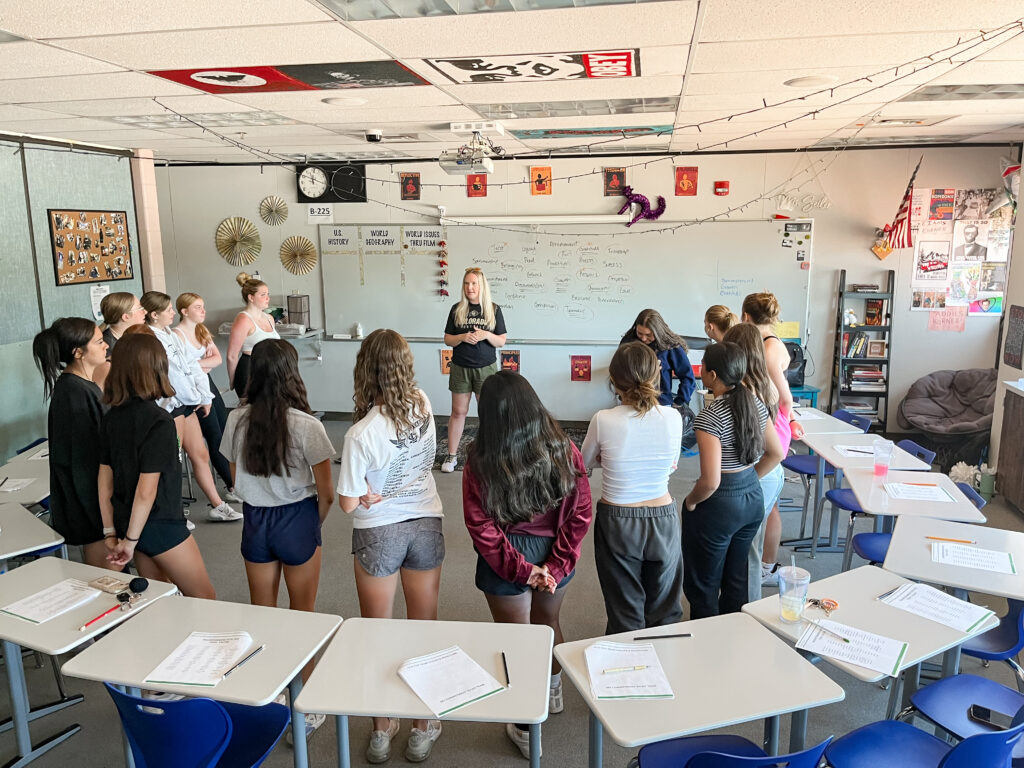
Pierotti says that in the studio, performance anxiety often manifests as a fear of going full-out or making mistakes. “The dancer is still ‘performing’ for their peers and directors,” she says. “They might hold back—say they’ll practice at home and not try again, or struggle to practice the emotional part of a performance because they worry too much about who is watching them.”
Annie Cox, a Brooklyn-based dance-theater artist, used to let body-image–related performance anxiety get in the way of her training. “I never had the stereotypical dancer’s body and was always made aware of it,” she says, whether through internal self-comparison or outright comments from others. After receiving one particularly hurtful comment from a teacher, and being placed in a lower-level dance class than her peers, she tried to blend into the background. She stopped auditioning for solos or featured parts, and she nearly discarded her dreams of dancing professionally. “I never took up space and actively avoided performing by myself,” she says. As a result, Cox felt her technical skills regressing, which pushed her even further toward the sidelines.
Mindset Matters
A dancer’s training environment often contributes to how perfectionism and performance anxiety manifest in the studio. Christine Flores, a professional commercial and concert-style dancer, remembers feeling like a small fish in a big pond at her competition studio. She was celebrated when her talent resulted in a win, not a personal best, which made it feel like she was always competing. That mentality, she says, transferred to her own harsh judgment of herself.
Pierotti explains that when leaders only praise dancers for successful outcomes, and not for their effort or individuality, it reinforces a harmful message: “You learn that you’re only worth it if you’re the best, in the front, the winner,” she says. Environments that celebrate small improvements create dancers with a healthy growth mindset, which helps them combat perfectionism and performance anxiety.
Pierotti emphasizes the importance of developing a growth mindset from within. She recommends what she calls the “three Rs,” inspired by the late sports psychologist Dr. Ken Ravizza:
- Release: Shake out your nerves and move your body. Tension breeds further anxiety.
- Reset: Take a grounding action to bring yourself back to the present moment, like a deep breath.
- Refocus: Talk to yourself, and ask yourself what is important right now. Take it one step, correction, or moment at a time.
Pierotti says that practicing the three Rs can help dancers resist a perfectionistic mindset and improve their performance onstage—looking within themselves for validation and confidence instead of their external environment.
Progress, Not Perfection
As she’s moved into the professional world, Cox has found success in cultivating confidence within herself. “I don’t have to compare myself to people around me,” she says. “I’ve learned that my value doesn’t come from blending in. I can move in a way no one else can and that, in itself, has value.”
Flores agrees, though she says that her feelings of perfectionism are a bit of a “puzzle” she’s still piecing together, even as a professional. “I just try to focus on being better, not perfect,” she says. “If you get caught up in everything that’s supposed to be ‘right’ while you’re dancing, you’ll be paralyzed. I try to just improve one thing at a time.”