Broadening the Playing Field: How to Transition Your Dancing From Stage to Stadium

For dancers used to traditional stages, performing on a massive football field or basketball court can seem intimidating. Making the leap from stage to stadium tests your stamina, performance quality, and adaptability. So whether you’re on your school’s pom squad or cutting it up center court on your first pro dance team, follow these tips to put your best foot forward on game day.
The Bigger, the Better
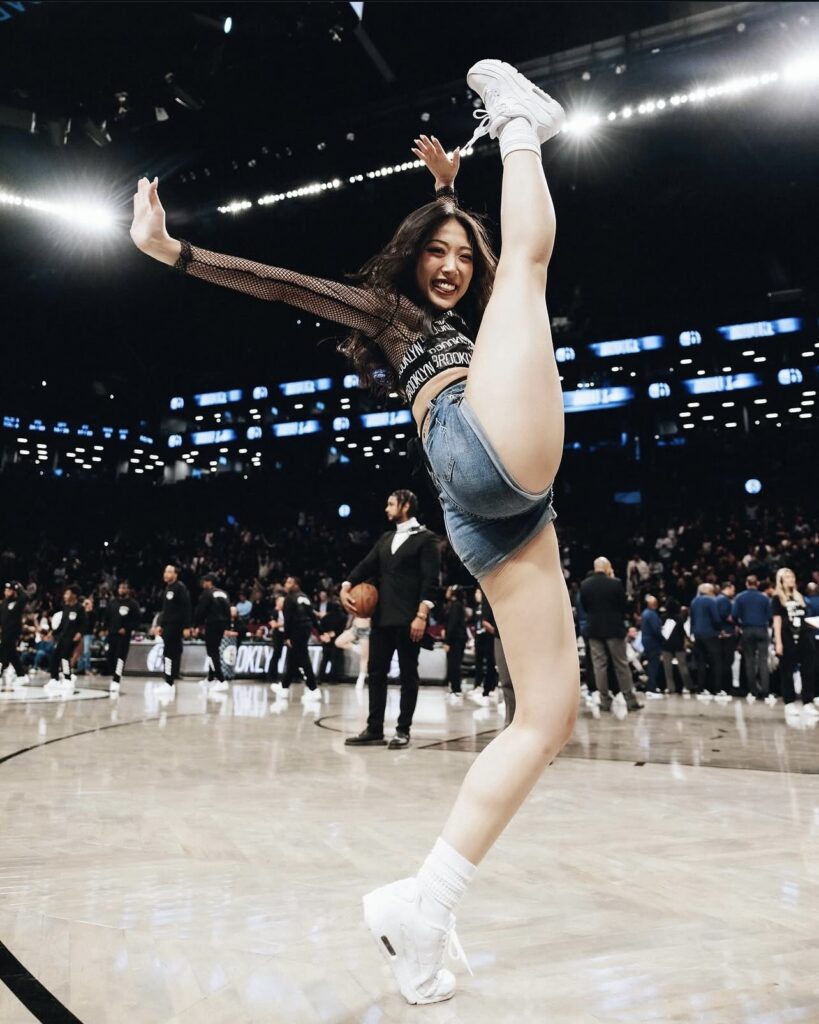
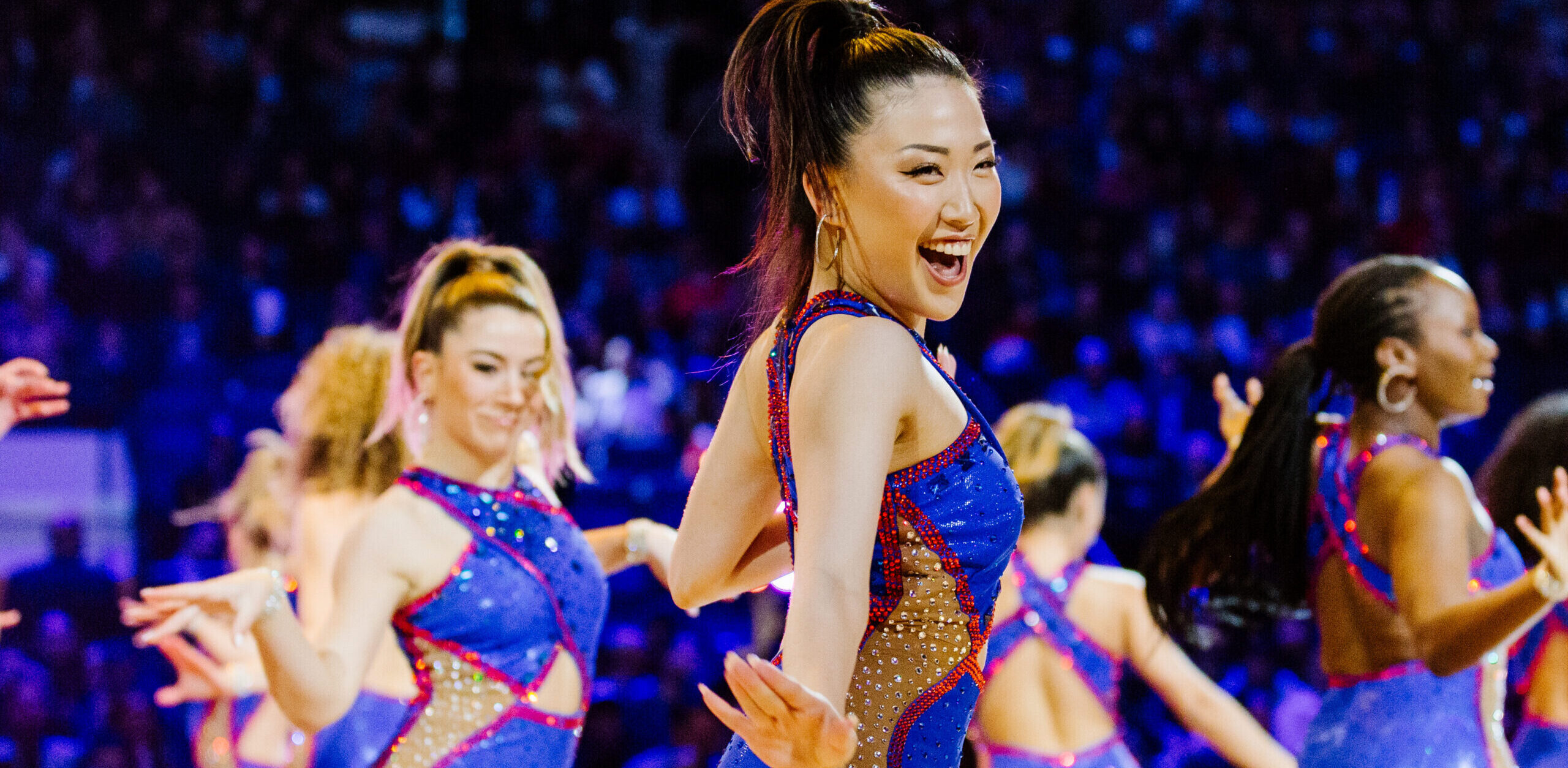
With considerably more dancing space and a much larger audience, stadiums and fields demand another level of energy and magnitude from your performance. Hayoung Roh, a former Brooklyn Nets dance-team captain who also performed with the Knicks City Dancers, can still remember the feeling of stepping onto the basketball court for her first game at Madison Square Garden. “I wasn’t used to the audience being 360 degrees around me, and the buzz from almost 20 thousand fans was crazy,” she recalls. To reach all of those fans, Roh recommends imagining a bubble of energy surrounding you as you dance. “I try projecting into all different spokes of the bubble, rather than just forward and out, which reminds me to keep my lats and back muscles engaged.”
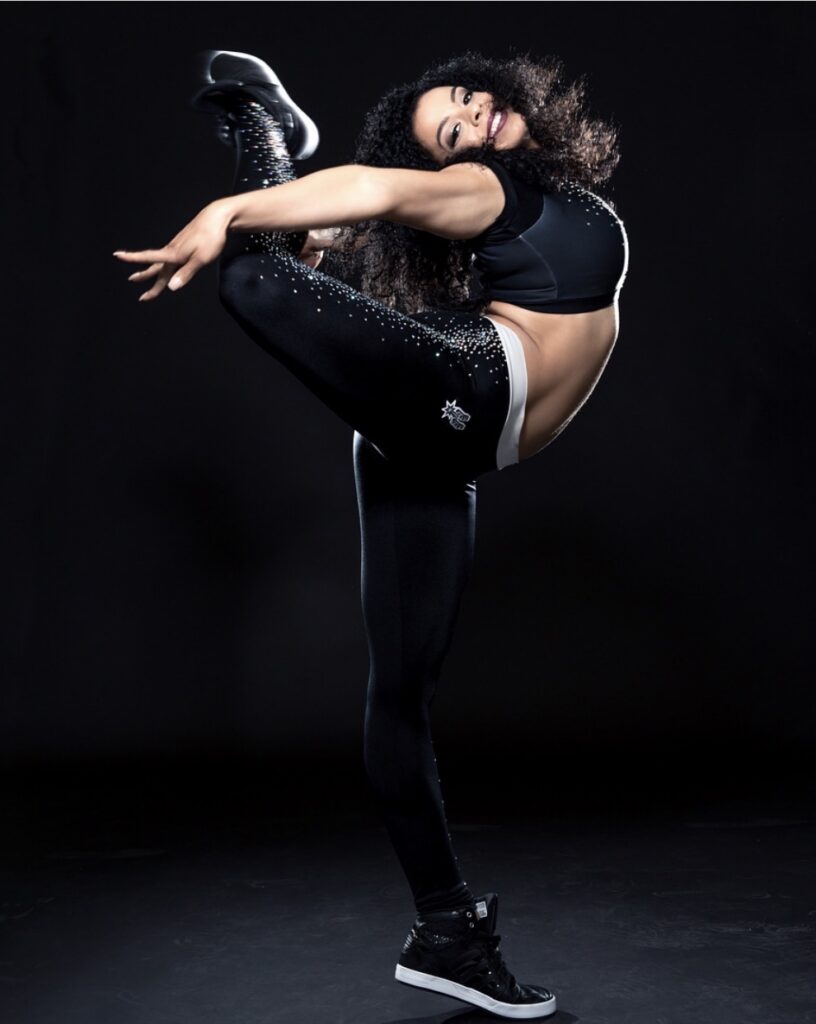
When coaching aspiring pro dancers, Jessica Butler, a former dancer for the NBA’s San Antonio Spurs and a two-time former NFL cheerleader, tells her students to use their whole bodies in each movement. “For example, if you’re doing a fist pump, incorporate your entire torso, not just your arm,” she says. Butler also suggests picking up the feet more intentionally in walks, travel steps, and jumps out to second. “In the NFL, a lot of teams wear boots, and this helps avoid getting your heels stuck in the turf,” she says. But the practice of exaggerating your movement applies even on hardwood basketball courts or when wearing sneakers.
Butler highly encourages using video as a tool for learning what “full-out” truly feels like: “Sometimes I’ll film myself dancing at what feels like 110 percent, only to watch it back and see it was more of an enthusiastic mark!”
Play to the Crowd…and the Camera
Typical proscenium stages allow for easy connection with the audience, who are usually seated at, or just above, the performer’s eyeline. But with stadiums or arenas, that changes. “Since the seats extend all the way up to the 300 level on a field or court, you always want to tilt your chin up just a bit, so it doesn’t appear like you’re looking down,” says Butler.
That being said, if cameras are around, it’s also important to be aware of them and make the most of your potential moment in the spotlight. “When the audience is watching the jumbotron screen and you’re smiling and performing right to the camera, it makes the fans feel like they’re right there with you,” Butler explains.
Be Ready to Move
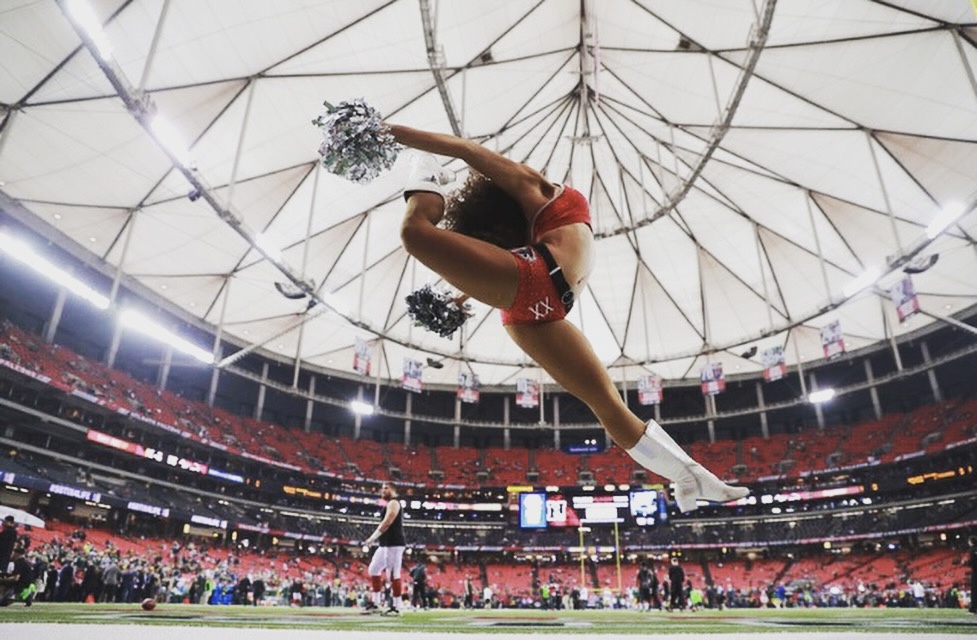
Stamina—both cardiovascular and muscular—is essential for meeting the demands of a game day, as performing in a larger space simply means there’s more ground to cover. “Let’s say you’re switching lines in a routine—in the studio, that might be four cute walks, but on a field, that could be 10 to 20 yards,” says Butler.
“In the NBA, our dances are a burst of energy for about a minute to a minute and a half,” says Roh, who runs on the treadmill outside of practice to build up her endurance and breath support. “It’s important to be able to give it your all and also not look out of breath at the end or on the sidelines when the cameras are still on you.”
Crank Up Your Confidence
According to Butler, developing confidence as an artist is the most effective way to boost your performance. “It’s normal to feel intimidated in a massive stadium for the first time and want to retreat and make yourself smaller,” she says. “But if you can remain confident in who you are and what you’re bringing to the field, your dancing will project that so largely and loudly.”
For Roh, fueling her sense of self on and off the court was the key to unlocking a new level of performance. “Lean into what makes you unique, because that’s what gives you that star quality,” she states. “You might think that it wouldn’t work if every dancer on a team is trying to be their own individual, but I find it creates this beautiful synergy that pushes everyone to be their best.”